The Panchakarma Series: Unifying Introduction
Purification of the Self, Purification of the Earth

THE PAÑCAKARMA SERIES — UNIFYING INTRODUCTION
Purification of the Self,
Purification of the Earth
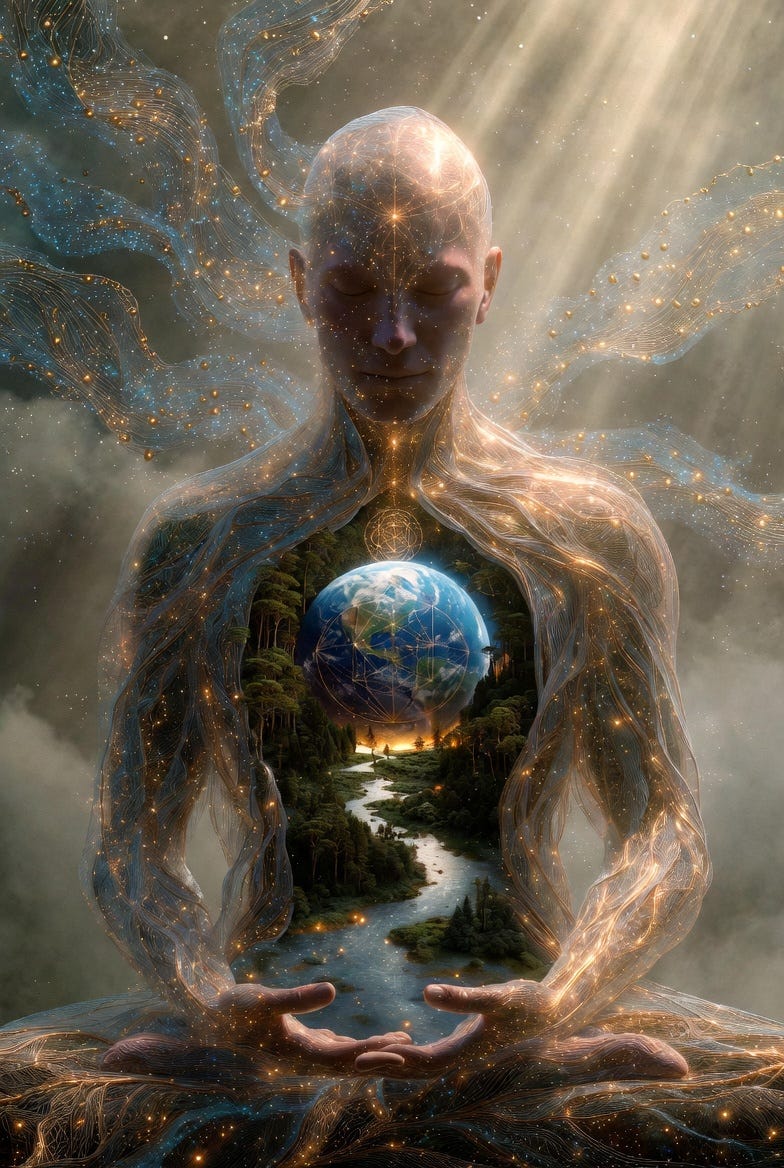
The Bhūtajaya Pañcakarma Series
A Unifying Introduction — Āyurvedic Purification, Sāṅkhya Cosmology,
and the Yogic Healing of the Earth-Body
Erik Phillips-Nania, RYT-500
Himalayan Kuṇḍalinī Yoga Lineage
AgniWellCare Publishing House — Yogaville (Buckingham), Virginia
Abstract
This essay introduces a five-part scholarly series on pañcakarma — the classical Āyurvedic protocol of fivefold purification — reframed within the Eco-Yoga (Bhūtajaya) tradition as a somatic practice of elemental mastery with both individual clinical and planetary ecological dimensions. The series proposes that the Āyurvedic concepts of doṣa, agni, āma, and srotas now possess credible biomedical correlates in chronic low-grade inflammation, gut-microbiome dysbiosis, autophagic clearance, and the glymphatic system; that the Sāṅkhya cosmology of the five mahābhūtas constitutes not metaphor but a phenomenology of matter homologous to the elemental cycles of the biosphere; and that pañcakarma, properly understood, is the embodied analog of the planetary purification work that ecological crisis demands. We synthesize the most rigorous available pañcakarma research — including the metabolomic study of Peterson and colleagues (2016) at the Chopra Center, the Ayurgenomic constitutional-typing work of Prasher and Patwardhan (2008), and the Karolinska sauna literature of Laukkanen and colleagues — with classical sources from the Caraka Saṃhitā, the Suśruta Saṃhitā, Patañjali’s Yoga Sūtras III.44–45 on bhūtajaya, and the Ṛgvedic ecological hymns. The unifying claim is that the yogi-physician who purifies the body is performing a homologous act to the ecological restoration of the rivers, soils, and atmospheres that share its substance. We outline a five-hypothesis research programme by which this thesis may be tested, sketch the AgniWellCare sanctuary model as its practical embodiment, and preview the arc of the five articles that follow.
Keywords
pañcakarma; Āyurveda; Bhūtajaya; Eco-Yoga; Sāṅkhya; mahābhūta; āma; agni; doṣa; srotas; glymphatic system; gut-soil microbiome axis; One Health; contemplative ecology; planetary healing
Developmental Model Stage
This unifying essay spans the full five-stage arc of the Neuro-Yogic Developmental Model articulated in Journal of Contemplative Neuroscience & Yogic Studies, Vol. I (Phillips-Nania, 2026), with primary anchoring at Stage 1 (Autonomic Regulation, addressed through the somatic purification work of pañcakarma) and Stage 5 (Collective Coherence, addressed through the participatory ecological dimension developed in the centerpiece Article 4).
1. Introduction: The Dual Crisis and the Single Body
We inhabit a moment of unprecedented dual emergency. The first is biomedical: a rising tide of chronic noncommunicable disease — cardiovascular illness, metabolic syndrome, autoimmunity, depression, neurodegeneration — whose underlying mechanisms increasingly converge on a single physiological signature, what Franceschi and colleagues termed inflammaging: chronic, sterile, low-grade inflammation as the common pathway of age-related disease (Franceschi et al., 2000; Furman et al., 2019).
The second is ecological: a planetary system whose elemental cycles — carbon, nitrogen, water, soil — have been pushed across multiple of the safe operating boundaries that Rockström and colleagues identified for the continued functioning of the biosphere (Rockström et al., 2009; Steffen et al., 2015). The two crises are not parallel; they are continuous. Pesticide residues in cropland appear in human serum; microplastic fragments now in human placental tissue mirror microplastic fragments in oceanic gyres; the antibiotic-disrupted human gut microbiome echoes the herbicide-disrupted soil microbiome on which it ultimately depends.

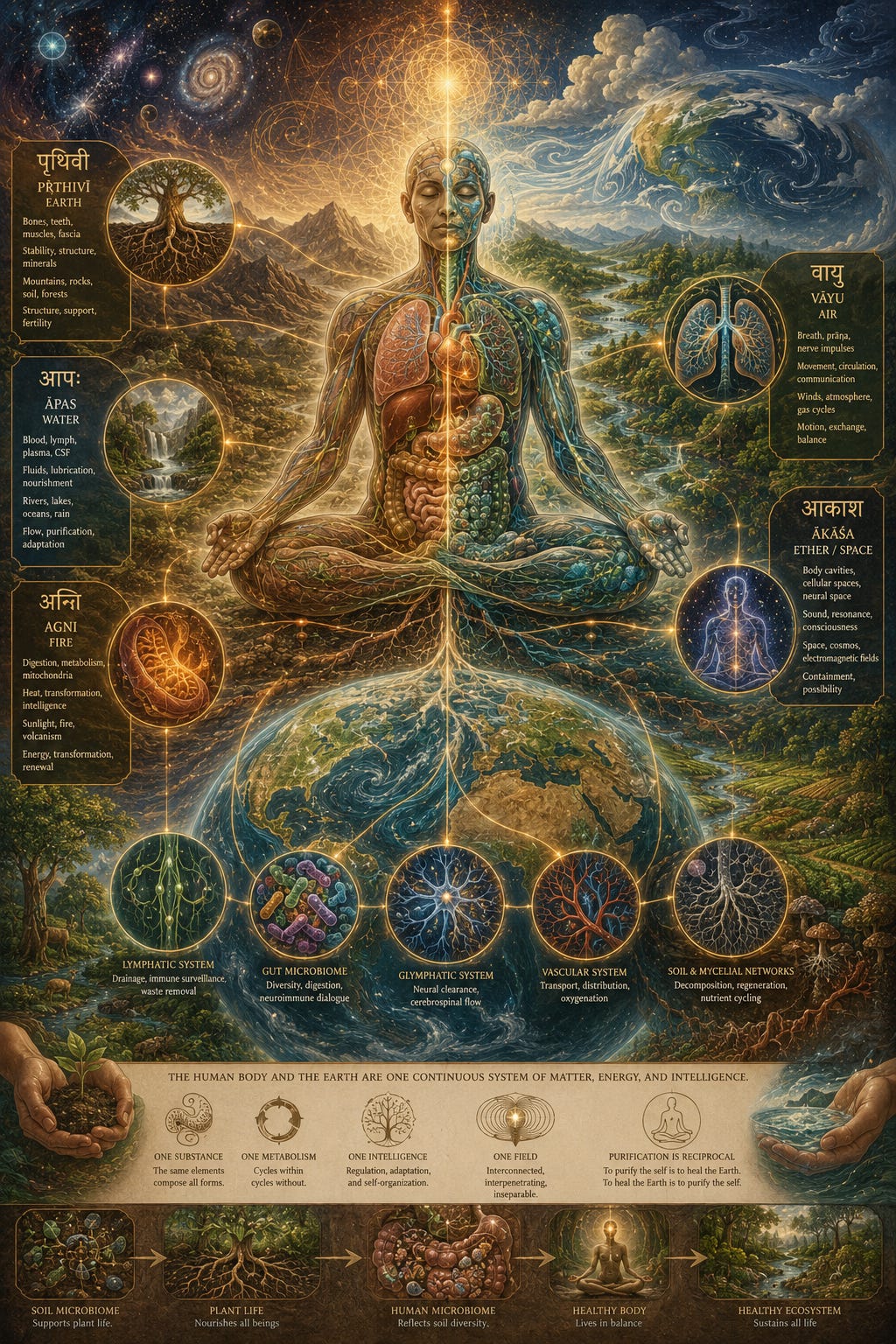
These two crises are not separately addressable. To purify the body in a polluted world is to mop while the faucet runs; to restore the soil while the body remains a sink for its toxicants is to clean a house while continually tracking in mud. The classical Yoga and Āyurveda traditions of the Indian subcontinent, whose phenomenology was developed long before either crisis took its modern form, articulated this insight at the level of metaphysics: prakṛti within and prakṛti without are one substance, undergoing one process. The body is not in the environment; the body is the environment in local concentration. The same five great elements — pañcamahābhūta: earth (pṛthivī), water (āpas), fire (agni), air (vāyu), and ether (ākāśa) — that constitute the cosmos constitute also the body, and a disturbance in either is a disturbance in both (Larson, 1979; Frawley, 1996; Patwardhan et al., 2015).
This essay introduces a five-part series that takes this ancient intuition seriously and treats pañcakarma — the fivefold purification protocol systematized in the Caraka Saṃhitā and the Suśruta Saṃhitā and refined over two millennia of clinical practice — as the most somatically literate technology yet developed for the simultaneous purification of self and world. We argue, across the five articles, that pañcakarma deserves to be understood not as a personal-wellness procedure imported from one cultural tradition into another, but as the embodied analog of the planetary purification work that the ecological moment requires. Properly framed, it is the centerpiece of Eco-Yoga (Bhūtajaya) — the contemplative-ecological discipline introduced in Moksha in the Modern Age: Journal of Contemplative Neuroscience & Yogic Studies, Vol. I, Article 7: Eco-Yoga: A Paradigm for Healing Mind and Planet (Phillips-Nania, 2026) — and the somatic foundation on which the rest of the Bhūtajaya curriculum rests.
The path before us is the following. Section 2 sketches the architecture of Āyurvedic purification — the four pillars of doṣa, agni, āma, and srotas — and proposes a contemporary biomedical translation of each. Section 3 develops the Sāṅkhya philosophical ground on which the body-Earth homology rests, drawing the equivalence between the five mahābhūtas within and the elemental cycles of the biosphere. Section 4 reframes the five karmas of pañcakarma as elemental practice — pañcakarma as bhūtajaya — drawing on Patañjali’s Yoga Sūtras III.44–45 as the philosophical underpinning. Section 5 previews the five articles of the series. Section 6 articulates the five testable hypotheses that constitute the empirical research programme this work proposes. Section 7 sketches the AgniWellCare sanctuary model as the practical embodiment of the thesis. Section 8 concludes with a return to the dual crisis, now reframed as a single invitation to embodied ecological practice.
A note on epistemology: this series, like the journal volume that precedes it, proceeds by genuine dialogue between two traditions. The classical Āyurvedic and Yogic sources are honored on their own terms, not merely as folk wisdom to be validated by Western science. Where contemporary peer-reviewed evidence supports a classical claim, that convergence is treated as clinically significant. Where the evidence is weak, modest, or absent, we say so. Where the classical tradition makes claims that exceed current empirical reach — as it does in its account of the siddhis (Yoga Sūtras III.16–55) — we treat those claims, following Marwaha and May (2016), as testable hypotheses for future inquiry rather than either dogma to defend or superstition to discard.
2. The Architecture of Āyurvedic Purification
Doṣa, Agni, Āma, and Srotas in Modern Translation
The Āyurvedic clinical model rests on four interlocking concepts that, taken together, describe how the body maintains itself and how that maintenance breaks down. Each has, in the last twenty years of integrative research, acquired credible biomedical correlates that warrant serious engagement.
Doṣa refers to the three primary functional principles — vāta (governing movement, the nervous system, catabolic processes), pitta (governing transformation, metabolism, the inflammatory and digestive fires), and kapha (governing structure, immunity, anabolic processes) — whose dynamic balance constitutes health and whose disturbance constitutes disease. The constitutional typing of individuals by their dominant doṣa combination (prakṛti) has been studied empirically in the Ayurgenomics programme of the CSIR-Institute of Genomics and Integrative Biology in Delhi. Prasher, Negi, Aggarwal, and colleagues (2008), in a landmark study published in the Journal of Translational Medicine, demonstrated that individuals classified by experienced practitioners into extreme vāta, pitta, and kapha constitutional types showed statistically distinct profiles in genome-wide expression, biochemical markers, and hematological parameters. The work has since been extended by Patwardhan, Mukerji, and colleagues (Patwardhan et al., 2015), and constitutes one of the most rigorous empirical investigations of any traditional medical typology. It does not validate every Āyurvedic claim, but it establishes that the prakṛti framework picks out genuine biological variation rather than arbitrary cultural categories.
Agni — literally “fire” — refers to the metabolic and digestive intelligence by which the body transforms ingested substances into tissues, energy, and waste. The Āyurvedic tradition recognizes multiple levels of agni: jāṭharāgni (digestive fire), bhūtāgni (the five elemental fires that process the mahābhūtas in food), and dhātvagni (the seven tissue-specific fires that build the body’s seven dhātus). Contemporary translation: jāṭharāgni maps to the integrated digestive-microbial process by which food is broken down and absorbed, including the gastric, pancreatic, hepatic, and microbiotic contributions; the gut microbiome (Cryan et al., 2019; Sender et al., 2016) is the most natural modern home for the concept. Dhātvagni maps to tissue-specific metabolic intelligence — mitochondrial function, cellular respiration, and the autophagic recycling identified by Yoshinori Ohsumi in his Nobel-recognized work (Mizushima & Komatsu, 2011; Levine & Kroemer, 2008). Autophagy, in particular — the cellular process by which damaged organelles and protein aggregates are recycled — is a strikingly literal modern instantiation of agni at the cellular scale.
Āma refers to the residue of incomplete digestion: the partially metabolized material that fails to be either absorbed as nutrient or excreted as waste, and that accumulates in the channels and tissues, generating disease over time. The Āyurvedic tradition identifies āma as the proximate substrate of nearly all chronic illness. The most natural contemporary translation is the cluster of phenomena now subsumed under chronic low-grade inflammation — the inflammaging of Franceschi (2000) — together with advanced glycation end-products, oxidized lipid species, and the lipophilic persistent organic pollutants (POPs) that accumulate preferentially in adipose tissue (Genuis, 2011). The convergence of contemporary chronic-disease etiology on chronic inflammation as a common pathway (Furman et al., 2019) is, on the Āyurvedic reading, the convergence of modern medicine on the recognition of āma.
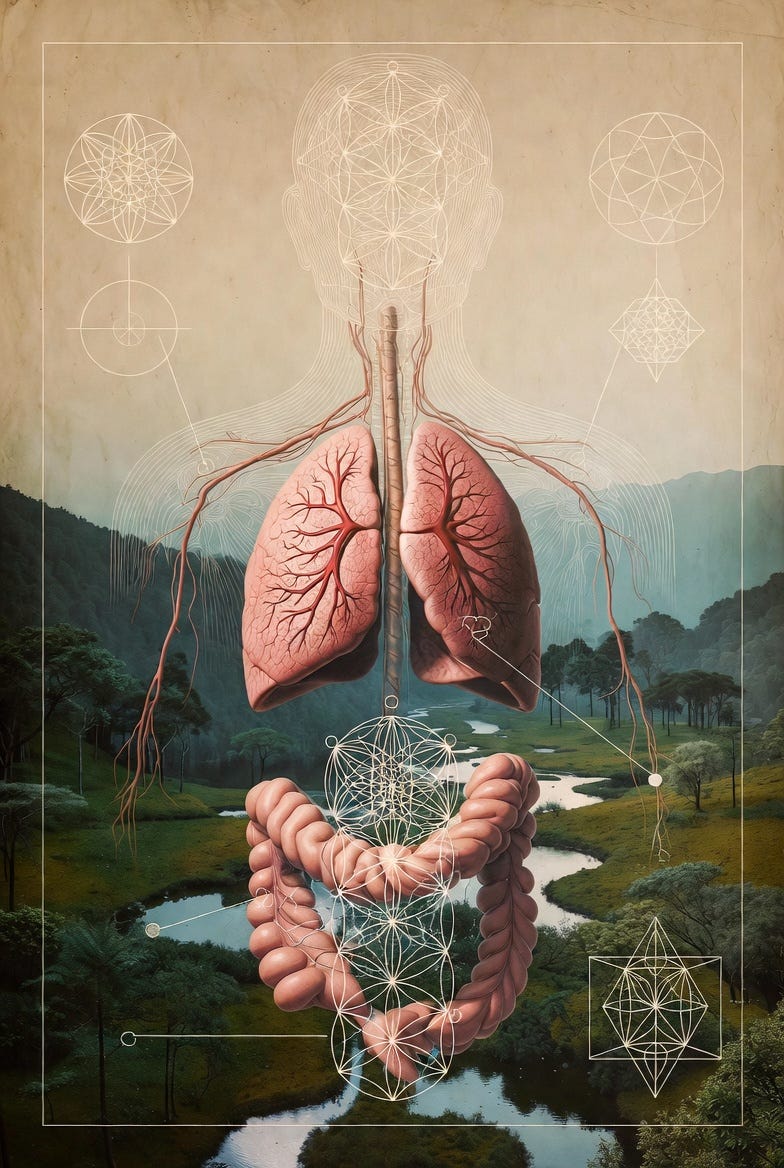
Srotas are the channels — anatomical, energetic, and informational — through which substances move within the body. The Caraka Saṃhitā enumerates thirteen principal srotas and notes that disease arises from their obstruction or rupture. Contemporary translation: the srotas map onto the vascular, lymphatic, gastrointestinal, respiratory, urinary, and — most strikingly — the glymphatic systems. The glymphatic system, characterized in a landmark paper by Iliff, Nedergaard, and colleagues in 2012, is the brain’s lymphatic-equivalent waste-clearance pathway, operating predominantly during sleep, by which interstitial solutes including amyloid-β are removed from neural tissue (Iliff et al., 2012; Xie et al., 2013). Its discovery answered a long-standing puzzle in neuroscience — how the brain disposes of its metabolic waste in the absence of conventional lymphatics — and its existence provides an almost ostensive demonstration of the srotas concept at the cerebral scale. The Āyurvedic emphasis on the sleep-purification cycle, nidrā, anticipates by two millennia the contemporary recognition that the glymphatic system is most active during slow-wave sleep.
Taken together, these four concepts furnish the foundation on which the rest of the series builds: the body maintains itself through the cooperation of constitutional types (doṣa), metabolic intelligence (agni), and channel patency (srotas); it accumulates dysfunction in the form of incomplete metabolism (āma); and chronic disease is, in the most general formulation, the lodging of āma in srotas obstructed by doṣic imbalance and weakened agni. Pañcakarma is the clinical protocol designed to dismantle this configuration: to reignite agni, clear āma, restore srotas patency, and rebalance doṣa. Article 1 of the series develops this architecture in detail, with the full evidence base for each modern correlate.
3. The Body-Earth Homology
Sāṅkhya, the Mahābhūtas, and the Two Movements of Prakṛti
The conceptual leap that distinguishes Eco-Yoga from conventional integrative medicine is grounded not in clinical observation but in metaphysics — specifically, in the Sāṅkhya cosmology that underlies both Āyurveda and Yoga. Sāṅkhya, the philosophical system of Kapila and Iśvarakṛṣṇa (Larson, 1979; Larson & Bhattacharya, 1987), posits a fundamental dualism between puruṣa — pure witnessing consciousness, plural and inactive — and prakṛti — the unified field of dynamic material-energetic process from which all phenomena arise. The unfolding of prakṛti through twenty-three evolutes — beginning with buddhi (the discriminative intellect), through ahaṃkāra (the principle of individuation), the manas (sensory mind) and the ten indriyas (cognitive and motor faculties), the five tanmātras (subtle sensory potentials), and finally the five mahābhūtas (gross elements) — produces the entire phenomenal world, both inner and outer.
The crucial point: there is only one prakṛti. The body and the world are not two substances; they are two local concentrations of a single field. The five elements that constitute the human organism — earth in the dense tissues, water in the fluids, fire in the metabolism, air in the breath and the movements, ether in the cavities and the field of consciousness — are not analogs of the planetary elements; they are the same elements, expressing locally what they also express globally. The Āyurvedic dictum yathā piṇḍe tathā brahmāṇḍe — “as in the body, so in the cosmos” — is not poetic but ontological.
This metaphysics, abstract on its face, generates a startling number of contemporary scientific echoes. The One Health framework, formally adopted by the World Health Organization, the Food and Agriculture Organization, and the World Organisation for Animal Health, codifies the recognition that human health, animal health, and ecosystem health are inseparable — that infectious diseases, antimicrobial resistance, and chronic disease emerge at the boundary of human, animal, and environmental systems (Mackenzie & Jeggo, 2019). The gut-soil microbiome axis literature — Blum, Zechmeister-Boltenstern, and Keiblinger (2019), Sonnenburg and Sonnenburg (2014), and the Rodale Institute’s white papers on regenerative agriculture — documents that human microbiome diversity depends substantively on the microbial diversity of the soils, plants, and animals with which we maintain contact. Studies of farm-exposed children — the Amish–Hutterite comparisons of von Mutius and colleagues — document that early-life soil-microbiome contact produces lifelong shifts in immune development, allergic disease risk, and microbiotic diversity. The human body, in its deepest biological economy, is continuous with the soil it has eaten and the water it has drunk and the air it has breathed — and so, when the soil is sterilized and the water is contaminated and the air is laden with particulates, the body’s microbiomes shrink, its immune system dysregulates, and its inflammatory load increases. The science is confirming the Sāṅkhya cosmology in its own vocabulary.
The five mahābhūtas furnish a phenomenology more precise than is usually appreciated. Pṛthivī (earth) — the principle of structural density, cohesion, gravitational pull — appears in the body as bone, muscle mass, and connective matrix, and in the planet as the geosphere, the soil column, the lithic structures that hold the world’s water and life. Āpas (water) — the principle of fluidity, cohesion, and binding — appears as the body’s fluids (blood, lymph, cerebrospinal fluid, interstitial fluid), and as the planetary hydrosphere whose cycles maintain all terrestrial life. Agni (fire) — the principle of transformation, heat, light — appears as digestion, metabolism, the inflammatory and immune fires, and as solar radiation, the carbon cycle’s energetics, the metabolic respiration of the biosphere. Vāyu (air) — the principle of movement and gaseous exchange — appears as the breath, the nervous system’s electrical movements, the circulatory dynamics, and as the planetary atmosphere whose circulation moves heat, moisture, and oxygen across continents. Ākāśa (ether/space) — the principle of openness, capacity, and the field within which the other four operate — appears as the body’s cavities, the interstitial space, the field of consciousness, and as the celestial and atmospheric space that holds the planet.
This is not a list of metaphors. It is a phenomenology of matter that picks out the same five categories at multiple scales of organization. And it generates a clinical-ecological corollary that the series develops in detail: to purify any element within the body is to participate, in homologous form, in the purification of that element without. The yogi-physician who clears agni-derangement from the body — who restores the balanced fire of digestion and metabolism — participates in the same dharma as the ecological restoration of healthy soil respiration, healthy carbon cycling, healthy atmospheric thermodynamics. The patient whose āpas-srotas (water channels) are cleansed of accumulated āma participates in the same dharma as the restoration of polluted watersheds. The purification is one purification.
The full development of this homology — its philosophical sources, its scientific buttresses, and its clinical implications — is the work of Article 4, the centerpiece of the series.
4. Pañcakarma as Bhūtajaya
The Five Actions as Elemental Practice
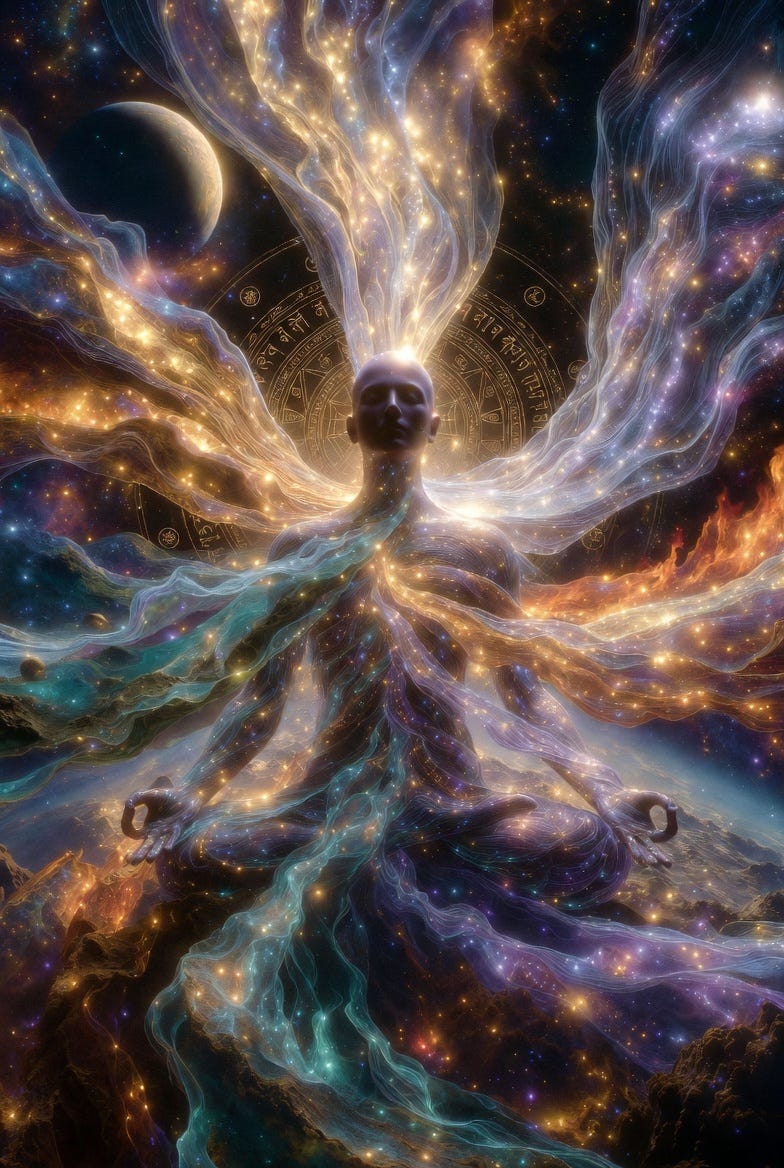
Patañjali’s Yoga Sūtras III.44–45 articulate the technical practice from which the Eco-Yoga discipline takes its inner name. The two sūtras read, in literal translation: sthūla-svarūpa-sūkṣma-anvaya-arthavattva-saṃyamāt bhūta-jayaḥ — “by saṃyama on the gross form, essential nature, subtle principle, interconnectedness, and purpose [of the elements], mastery over the elements arises” — and tato ‘ṇimādi-prādurbhāvaḥ kāya-sampat tad-dharma-anabhighātaś ca — “from this arise aṇimā and the other siddhis, perfection of the body, and the non-obstruction of the body’s functions by the elements.” The classical commentators understood bhūtajaya as the yogic culmination of elemental engagement — the practitioner’s capacity, won through sustained saṃyama, to participate consciously in the elemental processes of the world.
The contemporary Eco-Yoga reframing proposes that pañcakarma is the somatic ground of bhūtajaya. Each of the five classical karmas is an elemental practice: not a generic detoxification but a focused intervention on a specific elemental dimension of the body-cosmos.
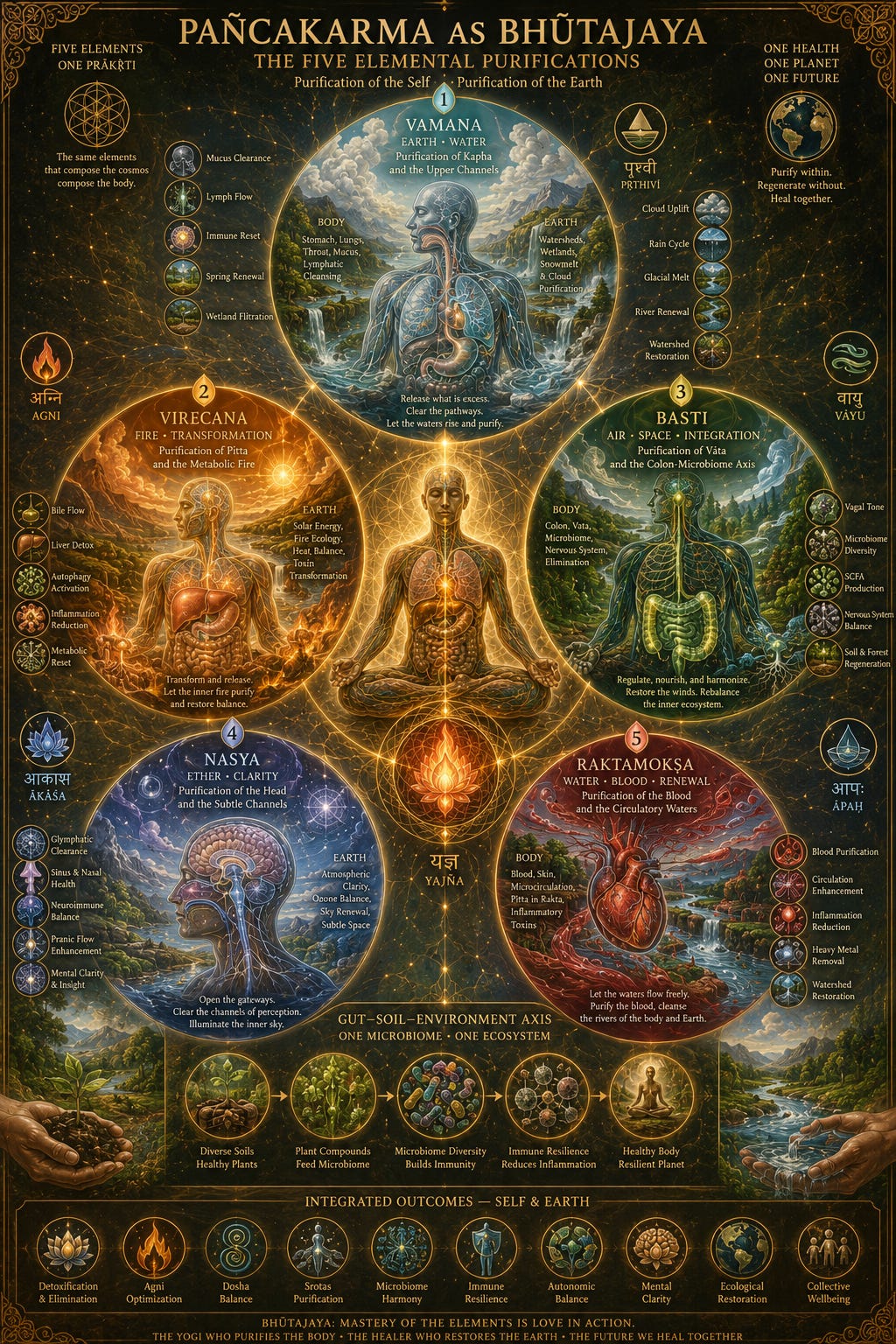
Vamana — therapeutic emesis — is the kapha karma: the upward clearance of excess earth-water saturation from the stomach and the upper respiratory tract. It addresses the body’s tendency toward stagnation, mucus, and excess structural mass. Reframed as bhūtajaya, vamana is the practitioner’s participation in the elemental upward movement — the seasonal lifting of moisture by solar energy, the spring melt that clears the winter’s accumulation.
Virecana — therapeutic purgation — is the pitta karma: the downward clearance of accumulated fire through the small intestine and the hepatobiliary system. It addresses the body’s tendency toward inflammation, accumulated bile, and metabolic heat. Reframed as bhūtajaya, virecana is the practitioner’s participation in the elemental clearance of excess fire — the cooling rains that follow the dry season, the dissipation of summer heat into autumn coolness.
Basti — medicated enema — is the vāta karma, and is described by classical sources as the king of the karmas, the single most powerful intervention. Administered into the colon, it works through the seat of vāta in the body, addressing the disturbances of movement, the depletions of the nervous system, and the dryness and hyperactivity of contemporary life. Basti is the karma with the strongest emerging biomedical evidence: the vagal afferents of the colon and the colonic microbiome are now understood to be primary regulators of systemic inflammation, autonomic tone, and central nervous system function (Cryan et al., 2019; van Nood et al., 2013). Reframed as bhūtajaya, basti is the practitioner’s participation in the elemental cycling of air and space — the planetary winds, the atmospheric circulations, the maintenance of healthy gaseous exchange.
Nasya — therapeutic nasal administration — is the karma of the ūrdhva-jatru region (the area above the clavicle) and addresses disturbances of the head, the sense organs, and the prāṇa that moves through them. Nasya is the karma with perhaps the most striking modern translation: the nose-to-brain pathway, by which intranasally administered substances bypass the blood-brain barrier through the olfactory and trigeminal routes (Hanson & Frey, 2008), is the biomedical correlate of the classical understanding that nasya directly accesses the cerebral srotas. The glymphatic system, again, provides the clearance side of this same architecture. Reframed as bhūtajaya, nasya is the practitioner’s participation in the elemental dimension of ākāśa (ether/space) — the openness of channels, the conductivity of the field.
Raktamokṣa — therapeutic bloodletting, including the use of medicinal leeches — is the karma of the rakta dhātu (blood tissue), a substance Āyurveda understands as the dynamic amalgam of fire and water. Less practiced in modern Indian clinical settings, raktamokṣa has nevertheless retained legitimacy in two Western biomedical contexts: therapeutic phlebotomy for hemochromatosis and polycythemia vera, and medicinal leech therapy for venous congestion in microsurgical reattachment procedures (FDA-approved since 2004). The classical indication — the clearance of “bad blood” carrying accumulated toxic load — finds modern echo in iron-overload pathology and in the recognition that elevated ferritin is a significant inflammatory and cardiovascular risk factor. Reframed as bhūtajaya, raktamokṣa is the practitioner’s participation in the elemental cycling of vital fluid — the watersheds, the bloodstreams of the body of the world.
This fivefold structure — five actions, five elemental dimensions, five participatory practices — gives pañcakarma a coherence that the conventional “detoxification” framing entirely misses. Pañcakarma is not generic toxin removal. It is a structured engagement with the five elemental dimensions of embodiment, each addressing a specific axis of accumulated disturbance and inviting the practitioner into a homologous relationship with the elemental processes of the cosmos. Article 3 of the series develops the clinical detail of each karma; Article 4, the centerpiece, develops the bhūtajaya reframing in full.
5. Anticipating the Arc
A Preview of the Five Articles
The series is structured as a developmental arc — from foundation to expansion to integration — paralleling the architecture of the Journal of Contemplative Neuroscience & Yogic Studies, Vol. I.
Article 1 — Foundations of Purification establishes the conceptual ground: doṣa, agni, āma, and srotas in dialogue with chronic inflammation, the gut-brain-microbiome axis, autophagy, and the glymphatic system. The article confronts the wellness industry’s misuse of “detox” language and argues that pañcakarma deserves serious clinical study precisely because its underlying model now possesses credible biomedical correlates.
Article 2 — Pūrvakarma: The Art of Softening addresses the often-overlooked preparatory phase: snehana (oleation, internal and external) and svedana (sudation). The article argues that pūrvakarma is not preliminary but constitutive — that the mobilization of lipophilic toxicants from adipose tissue depends precisely on the lipid-loading and heat-induced vasodilation that snehana–svedana provides, and that the literature on Finnish sauna outcomes (Laukkanen et al., 2015, 2017), abhyanga (Basler, 2011), heat shock proteins (Kregel, 2002), and polyvagal touch (Porges, 2011) together establish pūrvakarma as the most biochemically literate phase of the protocol.
Article 3 — Pradhāna Karma: The Five Actions presents the clinical heart of pañcakarma: vamana, virecana, basti, nasya, and raktamokṣa. Each is treated with attention to classical indication, modern physiological mechanism, and the strength of the available evidence. Basti receives extended treatment as the karma most ready for serious clinical study, with mechanisms running through the colonic microbiome, the enteric nervous system, and vagal afferents. The article models the epistemological transparency of Journal Vol. I: where evidence is strong it is so; where speculative, it is so labeled.
Article 4 — Pañcakarma of the Earth-Body is the centerpiece — the philosophical climax in which the four preceding articles’ clinical grounding becomes the foundation for the Eco-Yoga thesis. The article develops the Sāṅkhya body-cosmos homology in full, integrates Patañjali III.44–45 on bhūtajaya, and constructs the bhūtajaya curriculum in which each pañcakarma karma maps to a specific elemental practice. It engages the One Health framework, the gut-soil-microbiome axis, the body burden of persistent organic pollutants, and the Vedic yajña understanding that the body purified is an offering to the world.
Article 5 — Paścāt Karma and Rasāyana closes the arc, returning from cosmic vision to sustained practice. It reviews the rasāyana (rejuvenation) literature — Withania somnifera, Bacopa monnieri, Emblica officinalis, Tinospora cordifolia, triphala — drawing on the meta-analyses in Phytomedicine and the adaptogen framework of Panossian; integrates the dinacaryā and ṛtucaryā (daily and seasonal regimen) dimensions; and closes the loop by returning pañcakarma to its proper home in the practitioner’s sustained ecological life and sangha community.
6. Testable Hypotheses and the Research Programme
The series is not advanced as devotional commentary. It is a research programme. Five hypotheses, each empirically tractable, define the empirical frontier this work proposes.
Hypothesis 1 (Metabolomic). Pañcakarma produces measurable, reproducible shifts in the human metabolomic profile, particularly in phosphatidylcholine, sphingomyelin, and related lipid species, beyond what is achievable by lifestyle intervention alone. Status: Partially established by Peterson, Lucas, John-Williams, and colleagues (2016) in their Scientific Reports study of a five-day Chopra Center protocol, which identified twelve metabolite groups significantly altered post-intervention. Replication, dose-response studies, and characterization of the durability of these shifts are open priorities.
Hypothesis 2 (Body Burden). Pañcakarma, particularly its snehana–svedana phases, produces measurable reductions in body burden of lipophilic persistent organic pollutants (organochlorine pesticides, polychlorinated biphenyls, dioxins). Status: Genuis (2011) reviews the broader literature on POP mobilization through lipid and heat interventions; direct measurement in a pañcakarma cohort is, to our knowledge, not yet published and represents a high-value research opportunity for any sanctuary setting equipped to collect serial serum and adipose samples.
Hypothesis 3 (Microbiome). Pañcakarma produces durable, beneficial shifts in the gut microbiome, with characteristic increases in microbial diversity, short-chain fatty acid production, and reductions in pro-inflammatory taxa. Status: Strong mechanistic plausibility from the broader microbiome and dietary intervention literature; direct pañcakarma microbiome studies are emerging in the Indian and European integrative-medicine literature. Pre/post 16S and metagenomic sequencing in a controlled pañcakarma cohort is feasible and would substantially clarify the protocol’s biological signature.
Hypothesis 4 (Ecological Identity). Sustained engagement with pañcakarma within a Bhūtajaya curriculum produces measurable increases in ecological identity, nature-connectedness scores, and pro-environmental behavior, beyond what is produced by either pañcakarma or contemplative practice alone. Status: Plausible from the ecopsychology literature (Roszak, 1992; Nisbet et al., 2011) and from the preliminary findings in Phillips-Nania (2026, Vol. I, Article 7); requires a structured pre/post or controlled study using validated instruments such as the Nature Relatedness Scale and the Connectedness to Nature Scale.
Hypothesis 5 (Collective Coherence). Group/sangha pañcakarma protocols, conducted in residential community settings, produce measurable HRV synchronization across participants beyond what is observed in individual practice, and possibly produce field-level coherence effects of the kind documented in some collective intention research (McCraty et al., 2009; Radin et al., 2016). Status: This hypothesis is the most epistemically demanding and the most consistent with the Vol. I Eco-Yoga framing. It is tractable in principle through multi-participant HRV monitoring during residential pañcakarma; the larger field-coherence claim requires the kind of careful experimental designs developed in the parapsychological literature.
These five hypotheses jointly constitute a research programme that any contemplative-ecological research center — and River View Spa and AgniWellCare in particular, through The Way Inn and its emerging sanctuary infrastructure — is positioned to advance.
7. From Sanctuary to Sangha
Practical Applications at AgniWellCare and Beyond
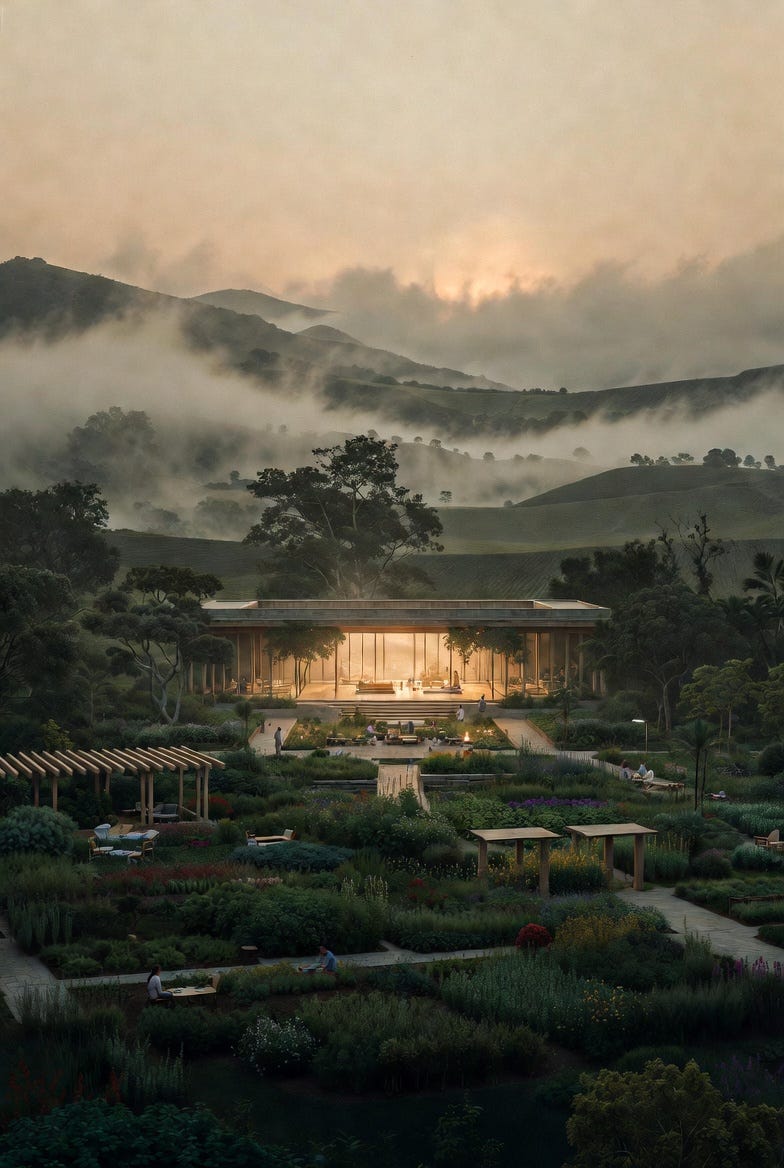
The practical embodiment of this thesis is the residential pañcakarma sanctuary integrated with the broader Eco-Yoga curriculum: a setting in which the protocol is conducted not in clinical isolation but in continuous relationship with garden, watershed, sangha, and contemplative practice. The Way Inn, the hospitality arm of AgniWellCare in Buckingham County, Virginia, was established with precisely this integration in mind, situated within the broader yogic community of Satchidananda Ashram (Yogaville) and operating as a contemplative retreat space rather than a generic short-term rental.
A fully realized AgniWellCare and River View Spa pañcakarma sanctuary would integrate, across a seven- to twenty-one-day residential stay, the following: classical pūrvakarma preparation under qualified Āyurvedic clinical guidance; structured pradhāna karma interventions appropriate to the practitioner’s prakṛti and current imbalance; a parallel daily contemplative protocol consisting of prāṇāyāma, dhyāna, and elemental saṃyama meditations from the Bhūtajaya curriculum; daily karma yoga participation in garden, watershed, or food-preparation work, grounding the inner purification in outer ecological engagement; sangha meals and evening satsaṅga; and post-residential rasāyana protocols and ongoing community connection sustained through Sabhā contemplative salon participation and continued Bhūtajaya practice.
This is not a vision of pañcakarma as luxury wellness tourism. It is a vision of pañcakarma as the somatic foundation of a contemplative-ecological life — a life in which inner purification and outer ecological participation are recognized as the single practice they have always been. The vision is replicable: every yogic community, every ashram, every contemplative-ecological land project has the potential to develop a sanctuary protocol along these lines, calibrated to its specific lineage, ecology, and clinical resources.
8. Conclusion
A Call to Embodied Ecological Practice
We began with two crises — the biomedical and the ecological — and the recognition that they are not separately addressable. We have proposed that pañcakarma, when reframed as bhūtajaya — the somatic discipline of elemental mastery — constitutes the embodied analog of the planetary purification work that the ecological moment demands. We have sketched the biomedical correlates of the Āyurvedic architecture; we have developed the Sāṅkhya body-cosmos homology; we have reframed the five karmas as five elemental practices; we have previewed the five articles of the series; and we have articulated five testable hypotheses that constitute its empirical research programme.
What remains is the work. The five articles that follow will develop each piece of this thesis with the scholarly density that Journal of Contemplative Neuroscience & Yogic Studies, Vol. I established as the standard. Each will be subject to revision, refinement, and the ongoing input of the lineage teachers, clinical practitioners, and research collaborators whose contributions make this kind of work possible. The Pañcakarma Series is offered, like the journal that precedes it, as a contribution to the founding of a field: the contemplative ecology of the body, in which the yogi-physician learns to read in their own tissues the same disturbances they read in the soils and waters and atmospheres of the living Earth, and learns also to participate in the healing of both as the single act it has always been.
The Vedic yajña tradition recognized this. The body offered to the elements was the elemental order restored. The breath given to the wind was the wind given to the breath. The water purified within was the water purified without. Yathā piṇḍe tathā brahmāṇḍe: as in the body, so in the cosmos. May the work of this series serve the awakening of those who undertake it, and may that awakening serve the healing of all beings and the living Earth.
Oṃ śāntiḥ śāntiḥ śāntiḥ.
References
Selected and illustrative; the research arc of the five articles will expand this list substantially.
Basler, A. J. (2011). Pilot study investigating the effects of Ayurvedic Abhyanga massage on subjective stress experience. Journal of Alternative and Complementary Medicine, 17(5), 435–440.
Blum, W. E. H., Zechmeister-Boltenstern, S., & Keiblinger, K. M. (2019). Does soil contribute to the human gut microbiome? Microorganisms, 7(9), 287.
Caraka. Caraka Saṃhitā. (Sharma, R. K. & Dash, B., trans.) Chowkhamba Sanskrit Series, multiple volumes.
Cryan, J. F., O’Riordan, K. J., Cowan, C. S. M., et al. (2019). The microbiota-gut-brain axis. Physiological Reviews, 99(4), 1877–2013.
Franceschi, C., Bonafè, M., Valensin, S., et al. (2000). Inflamm-aging: An evolutionary perspective on immunosenescence. Annals of the New York Academy of Sciences, 908, 244–254.
Frawley, D. (1996). Ayurveda and the Mind: The Healing of Consciousness. Lotus Press.
Furman, D., Campisi, J., Verdin, E., et al. (2019). Chronic inflammation in the etiology of disease across the life span. Nature Medicine, 25(12), 1822–1832.
Genuis, S. J. (2011). Elimination of persistent toxicants from the human body. Human & Experimental Toxicology, 30(1), 3–18.
Hanson, L. R., & Frey, W. H., II. (2008). Intranasal delivery bypasses the blood-brain barrier to target therapeutic agents to the central nervous system and treat neurodegenerative disease. BMC Neuroscience, 9(Suppl. 3), S5.
Iliff, J. J., Wang, M., Liao, Y., et al. (2012). A paravascular pathway facilitates CSF flow through the brain parenchyma and the clearance of interstitial solutes, including amyloid-β. Science Translational Medicine, 4(147), 147ra111.
Kregel, K. C. (2002). Heat shock proteins: Modifying factors in physiological stress responses and acquired thermotolerance. Journal of Applied Physiology, 92(5), 2177–2186.
Larson, G. J. (1979). Classical Sāṃkhya: An Interpretation of Its History and Meaning. Motilal Banarsidass.
Larson, G. J., & Bhattacharya, R. S. (1987). Sāṃkhya: A Dualist Tradition in Indian Philosophy. Princeton University Press.
Laukkanen, T., Khan, H., Zaccardi, F., & Laukkanen, J. A. (2015). Association between sauna bathing and fatal cardiovascular and all-cause mortality events. JAMA Internal Medicine, 175(4), 542–548.
Laukkanen, T., Kunutsor, S., Kauhanen, J., & Laukkanen, J. A. (2017). Sauna bathing is inversely associated with dementia and Alzheimer’s disease. Age and Ageing, 46(2), 245–249.
Levine, B., & Kroemer, G. (2008). Autophagy in the pathogenesis of disease. Cell, 132(1), 27–42.
Mackenzie, J. S., & Jeggo, M. (2019). The One Health approach—Why is it so important? Tropical Medicine and Infectious Disease, 4(2), 88.
Marwaha, S. B., & May, E. C. (2016). Rethinking extrasensory perception: Toward a multiphasic model of precognition. SAGE Open, 6(1).
McCraty, R., Atkinson, M., Tomasino, D., & Bradley, R. T. (2009). The coherent heart: Heart-brain interactions, psychophysiological coherence, and the emergence of system-wide order. Integral Review, 5(2).
Mizushima, N., & Komatsu, M. (2011). Autophagy: Renovation of cells and tissues. Cell, 147(4), 728–741.
Nisbet, E. K., Zelenski, J. M., & Murphy, S. A. (2011). Happiness is in our nature: Exploring nature relatedness as a contributor to subjective well-being. Journal of Happiness Studies, 12(2), 303–322.
Patwardhan, B., Mutalik, G., & Tillu, G. (2015). Integrative Approaches for Health: Biomedical Research, Ayurveda, and Yoga. Academic Press.
Peterson, C. T., Lucas, J., John-Williams, L. S., et al. (2016). Identification of altered metabolomic profiles following a Panchakarma-based Ayurvedic intervention in healthy subjects. Scientific Reports, 6, 32609.
Phillips-Nania, E. (2026). Journal of Contemplative Neuroscience & Yogic Studies, Vol. I. AgniWellCare Publishing House.
Porges, S. W. (2011). The Polyvagal Theory: Neurophysiological Foundations of Emotions, Attachment, Communication, and Self-Regulation. Norton.
Prasher, B., Negi, S., Aggarwal, S., et al. (2008). Whole genome expression and biochemical correlates of extreme constitutional types defined in Ayurveda. Journal of Translational Medicine, 6, 48.
Radin, D., Michel, L., Pierce, A., & Delorme, A. (2016). Psychophysical interactions with a double-slit interference pattern. Physics Essays, 29(1).
Rockström, J., Steffen, W., Noone, K., et al. (2009). A safe operating space for humanity. Nature, 461, 472–475.
Roszak, T. (1992). The Voice of the Earth: An Exploration of Ecopsychology. Simon & Schuster.
Sender, R., Fuchs, S., & Milo, R. (2016). Revised estimates for the number of human and bacteria cells in the body. PLoS Biology, 14(8), e1002533.
Sonnenburg, E. D., & Sonnenburg, J. L. (2014). Starving our microbial self: The deleterious consequences of a diet deficient in microbiota-accessible carbohydrates. Cell Metabolism, 20(5), 779–786.
Steffen, W., Richardson, K., Rockström, J., et al. (2015). Planetary boundaries: Guiding human development on a changing planet. Science, 347(6223), 1259855.
Suśruta. Suśruta Saṃhitā. (Sharma, P. V., trans.) Chowkhamba Visvabharati, multiple volumes.
van Nood, E., Vrieze, A., Nieuwdorp, M., et al. (2013). Duodenal infusion of donor feces for recurrent Clostridium difficile. New England Journal of Medicine, 368(5), 407–415.
Xie, L., Kang, H., Xu, Q., et al. (2013). Sleep drives metabolite clearance from the adult brain. Science, 342(6156), 373–377.
Draft v0.1 — to be revised after research and drafting of the five articles.
AgniWellCare Publishing House · Buckingham (Yogaville), Virginia